Previous Projects

Networks and Consortia

STOP-FSGS

Speed Translation-Oriented Progress to Treat FSGS

STOP-FSGS consortium has made an enormous contribution to unravel molecular and cellular mechanisms underlying FSGS, to develop novel diagnostic tools and to identify novel biomarkers and potential therapeutic strategies. Building on these achievements, STOP-FSGS will now:

1. combine the high-resolution microscopy-, high-end imaging-, single cell biology- and AI-based STOP-FSGS-workflows enabling an improved and novel FSGS disease stratification and prediction.

2. refine the STOP-FSGS diagnostic biomarkers by applying non-invasive imaging, workflows to measure the activity of soluble factors and personalized screening tools (zebrafish and iPSCs).

3. devise novel patient-tailored therapeutic strategies achieved by high-throughput FDA-approved drug screening, developing novel delivery routes (AAV-based gene therapy, nanoparticle based delivery) and establishing new clinical diagnostic algorithms.

Visit Hompepage STOP-FSGS

BEAt-DKD

Biomarker Enterprise to Attack DKD

Diabetic kidney disease (DKD) is the leading cause of end stage renal disease (ESRD) but there are no effective means to prevent or cure DKD. BEAt-DKD comprises a network of basic and clinical research experts, including the leaders of the diabetes and kidney disease-relevant consortia and leading pharmaceutical companies to enable a holistic system medicine view of the pathogenesis to identify of target mechanism and pathways underlying initiation and progression of DKD. The identification and validation of biomarkers of disease progression and treatment responses representing first steps towards precision medicine in the disease management.

Visit www.beat-dkd.eu

UPTAKE

Urinary proteome analysis for the prediction of type, extent, prognosis, and therapeutic response of acute and chronic kidney diseases

Can urinary peptides guide intervention in chronic kidney diseases towards personalized intervention?

For accurate diagnosis of kidney diseases a renal biopsy is currently indispensable. Biopsy allows classification of the disease but, especially in slow progressing non-nephrotic diseases, is not very helpful in the judgement of prognosis and therapeutic response. The aim of UPTAKE is to test the ability of the urinary proteome analysis to substitute for renal biopsy, to predict extent of fibrosis and to predict response to therapy.
NephrESA

Nephrotic Syndrome Study Network

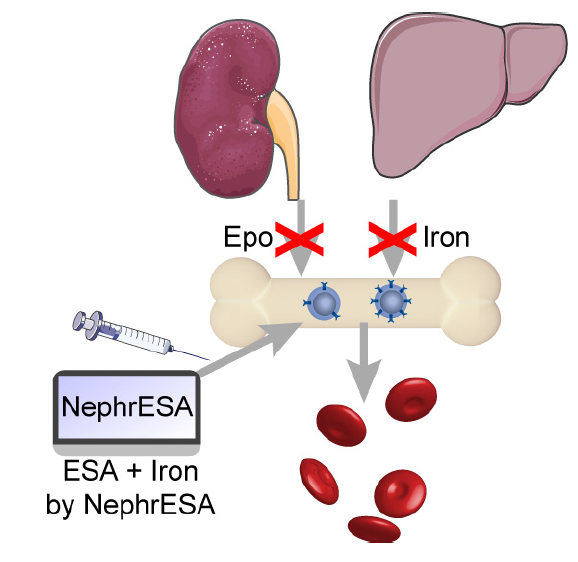
Progression of chronic kidney disease (CKD) is associated with impairment of erythropoietin (Epo) secretion and patients develop a renal anaemia that needs to be treated with erythropoiesis stimulating agents (ESAs). NephrESA is a mechanism-based multiscale model. which simulates EPO interactions in the human body. The integration and different combinations of specific submodels (inflam, iron, thromb) are utilized to retrospectively analyse the clinical data to establish a minimal model structure to optimize anaemia treatment for the individual CKD patient and particularly reduce the risk of thrombovascular events.
Visit www.gesundheitsforschung-bmbf.de

Read more …Previous Projects

HAKIS

The Hamburg Acute Kidney Injury Study 

The Hamburg Acute Kidney Injury Study (HAKIS) is a prospective observational cohort study that aims to improve the understanding of health outcomes after acute kidney injury (AKI). AKI affects up to one in five hospitalized patients and is associated with short- and long-term consequences, including chronic kidney disease, cardiovascular complications, and increased mortality.1-4 HAKIS focuses on understanding how kidney function evolves after AKI, why some patients recover while others do not, and which clinical and biological factors influence short- and long-term outcomes.

  • Study Characteristics

    Why:

    • Acute kidney injury (AKI) is common but often under-recognized5
    • After AKI, patients are at increased risk of short- and long-term adverse outcomes
    • Evidence-based strategies to monitor or manage patients after AKI are sparse
    • HAKIS aims to provide new knowledge that helps estimating short- and long-term risks and improve follow-up care

    Study Aims:

    • Characterize kidney, cardiovascular, and general health outcomes after AKI
    • Evaluate biomarkers associated with adverse outcomes of AKI
    • Identify clinical and biological factors associated with recovery or progression to chronic kidney disease
    • Support the development of risk-based follow-up care for AKI survivors

    Study Overview:

    • HAKIS includes hospitalized adults with AKI
    • A control group of hospitalized adults with acute illness but without AKI is also incorporated
    • Participants are followed over time to understand kidney disease recovery, progression, and outcomes

    Study Characteristics:

    Structured Patient Follow-up: Participants with AKI receive standardized evaluations during and after hospitalization to monitor kidney function and general health.

    Participant Safety and Ethics: No study-specific treatments or interventions are performed. Data are primarily collected from routine clinical care and - whenever possible - directly obtained from electronic health records to minimize the burden for participants. The study adheres to strict ethical standards and follows General Data Protection Regulation (GDPR)-compliant data protection protocols.

    Integrated Biobanking: Blood and urine samples collected during the study are processed using standardized procedures and stored in the Hamburg and European Renal Omics Biobank (HERO) according to strict data protection protocols to enable future kidney research.

    Transparency and Scientific Quality: HAKIS is registered on ClinicalTrials.gov (Identifier: NCT07338669) and follows international guidelines for clinical research quality and reporting.

    Contribution to Global Kidney Research: By generating high-quality clinical data and biological samples, HAKIS supports national and international research efforts aimed at improving risk prediction, prognosis, and long-term care after AKI.

  • Detailed Study Description

    HAKIS is a prospective observational cohort study that includes hospitalized adults (≥18 years) at the time they experience acute kidney injury (AKI). Potential participants are identified during hospital care, and a structured IT-supported clinical screening system helps detect cases of AKI in real time. To allow comparison, a control group of hospitalized patients with acute illness but without AKI is also incorporated. This helps identify risk factors and mechanisms that are specific to AKI.
    All participants undergo a standardized clinical assessment of kidney function, comorbidities, hemodynamic status, medication exposure, procedures, and laboratory parameters. The study includes serial collection of clinical data and biosamples (blood and urine) at predefined time points:
    • At AKI diagnosis
    • During hospitalization
    • At an outpatient visit 3 months after discharge
    All biospecimens are processed according to a harmonized protocol and stored in the Hamburg and European Renal Omics-Biobank (HERO) according to strict data protection protocols for advanced molecular analyses. Whenever possible, study data are obtained directly from electronic health records to minimize burden for participants.
    Long-term outcomes including progressive chronic kidney disease, cardiovascular events, hospital readmissions, and mortality are collected through annual structured follow-ups.

    For more information, please visit: Study Overview

  • Contact


    Study Center

    Contact for Participants

    • General Questions and Participant Rights: Study Center, This email address is being protected from spambots. You need JavaScript enabled to view it.
    • Coordination of Follow up: Katja Lange, This email address is being protected from spambots. You need JavaScript enabled to view it.

    Contact for Professionals

    • Project Coordination: Dr. Christian Schmidt-Lauber, This email address is being protected from spambots. You need JavaScript enabled to view it.
    • Deputy Project Coordination: Dr. Alexandre Klopp, This email address is being protected from spambots. You need JavaScript enabled to view it.

References

1.
Susantitaphong P, Cruz DN, Cerda J, Abulfaraj M, Alqahtani F, Koulouridis I, Jaber BL; Acute Kidney Injury Advisory Group of the American Society of Nephrology. Clin J Am Soc Nephrol. 2013 Sep;8(9):1482-93. 
2.
Chawla LS, Eggers PW, Star RA, Kimmel PL. N Engl J Med. 2014 Jul 3;371(1):58-66. 
3.
Coca SG, Yusuf B, Shlipak MG, Garg AX, Parikh CR. Am J Kidney Dis. 2009 Jun;53(6):961-73. 
4.
Veltkamp DMJ, Porras CP, Gant CM, Groenestege WMT, Kok MB, Verhaar MC, van Solinge WW, Haitjema S, Vernooij RWM. Nephrol Dial Transplant. 2025 Oct 30;40(11):2143-2158.
5.
Khadzhynov D, Schmidt D, Hardt J, Rauch G, Gocke P, Eckardt KU, Schmidt-Ott KM. Dtsch Arztebl Int. 2019 May 31;116(22):397-404.

Read more …HAKIS

iPRIME PhD

iPRIME Medical Scientist Program

The Else Kröner-Fresenius Foundation (EKSF) is funding the UKE junior researcher program “iPRIME- PhD - Integrative (Inter-)Organ Immunology and Career Development”. The aim of the colleague is to enable outstanding young scientists in the field of basic research to become more firmly anchored in the medical context and to specifically promote their work towards clinical application.

The new iPRIME research group investigates immune processes at three levels: organ-specific immunity, systemic immune response and inter-organ communication and is headed by Prof. Dr. Tobias Huber, Dr. Sybille Köhler and Dr. Kristina Schulz from the III. Department of Medicine and Prof. Dr. Petra Arck from the Centre for Obstetrics, Pediatrics and Adolescent Medicine at the UKE. The aim is to identify new therapeutic approaches and translate clinical observations into new diagnostic and therapeutic approaches. Young scientists benefit from personalized career plans, intensive mentoring and interdisciplinary networking.

The program for Medical Scientists complements the already established iPRIME Medical student and the iPRIME Clinical Scientist program at the UKE. Together, they now form a nationally unique, interdisciplinary EKFS cluster with a focus on immune-mediated diseases.

Read more …iPRIME PhD

Startseite Neu

  • We aim at closing the translational circle from patient needs to novel therapies

    AIMING FOR DISCOVERY

    .

    About us

  • Scientific advance is always a team effort

    FINDING SOLUTIONS TOGETHER

    .

    Teams

  • From basic biology to disease mechanisms and patient cure

    IMPROVING PATIENT LIVES

    .

    Research Areas

HCKH

Together we aim to improve patient lives and society health.

Research Areas

View All

  • Immune-Mediated kidney disease

  • Metabolic kidney disease

  • Genetic and epigenetic kidney disease

  • Epidemiology and kidney disease

  • Interorgan communication in health and disease

discover

Our research is supported by various national and international grants.

Research Initiatives

News & Career - Latest Articles

View All

Media - Our Podcasts & Videos

View All

Read more …Startseite Neu

Martinistraße 52
Campus Research II N25
20246 Hamburg Germany
This email address is being protected from spambots. You need JavaScript enabled to view it.

University Medical Center Hamburg - Eppendorf